
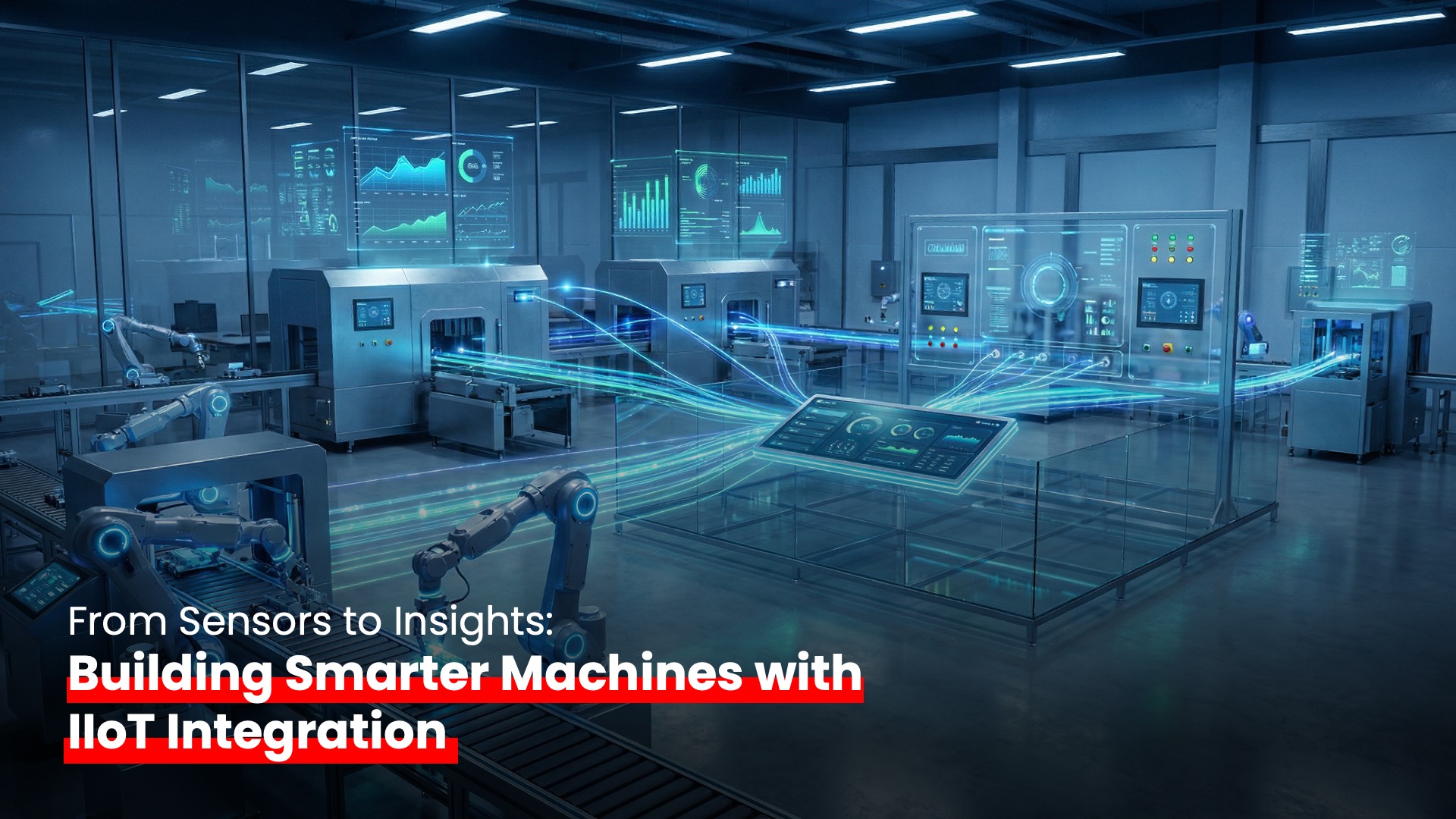
Walk into any modern manufacturing facility and you’ll notice something has changed. Machines aren’t just running —they’re talking. Motors report their own health, sensors flag tiny variations before problems appear, and production lines quietly generate a constant stream of data. The challenge isn’t getting data anymore. It’s knowing what to do with it.
That’s where the Industrial Internet of Things (IIoT) comes in.
IIoT connects sensors, machines, and systems so industrial operations can move beyond reactive fixes and gut-based decisions. Instead of waiting for equipment to fail or reviewing performance after the fact, manufacturers can see what’s happening in real time and act on it. But simply installing sensors isn’t enough. Without the right integration, that data remains noise.
The real value of IIoT lies in turning raw signals into insights that improve uptime, quality, energy efficiency, and decision-making. In this article, we’ll walk through how that transformation happens from the moment a sensor captures data to the point where insights drive smarter, faster actions on the factory floor and across the enterprise.
The Role of Sensors in IIoT
Sensors are the foundation of any IIoT system. They capture real-time data from physical processes and equipment, translating real-world conditions into digital signals. Common IIoT sensors monitor variables such as temperature, pressure, vibration, torque, proximity, humidity, flow rate, and energy consumption.
Unlike traditional sensors, IIoT sensors are designed to be connected, intelligent, and scalable. They often include embedded processing capabilities, support industrial communication protocols, and provide continuous data streams rather than periodic measurements. This enables far greater visibility into machine performance and operational health.
IIoT systems rely on connectivity to move data from machines to analytics platforms. Industrial protocols like OPC UA, MQTT, and Ethernet/IP are common because they support interoperability across devices and systems.
Without standard communication methods, IIoT deployments become siloed, inefficient, and difficult to scale.
Modern IIoT architectures typically use a hybrid approach:
- Edge computing processes data close to the source which makes it ideal for real-time decisions and reduced latency.
- Cloud computing stores and analyzes large volumes of data over time, enabling advanced analytics and long-term insights.
This combination enables smart machines to act instantly while also learning and improving over time.
IIoT Architecture: How Data Flows from Edge to Enterprise
A successful IIoT deployment depends on a well-designed architecture that ensures reliable data flow, security, and scalability. It follows the following architecture:
1. Connectivity Layer
The connectivity layer enables communication between sensors, machines, and higher-level systems. Depending on the environment, this may include wired Ethernet, industrial fieldbuses, or wireless technologies.
Protocols such as OPC UA, MQTT, and industrial Ethernet are commonly used to ensure interoperability and secure data exchange. Reliable connectivity is critical for data transmission, maintaining uptime and operational continuity in demanding industrial environments.
2. Data Processing and Analytics Layer
Once collected, sensor data must be processed and analyzed to generate value. This layer may exist at the edge, in the cloud, or in a hybrid configuration.
Advanced analytics platforms aggregate data from multiple machines and systems, enabling pattern recognition, trend analysis, and anomaly detection. Over time, historical data builds a rich foundation for predictive and prescriptive insights.
3. Application Layer
The application layer is where insights become actionable. Dashboards, alerts, reporting tools, and automated control systems present information in a form that operators, engineers, and managers can use.
Well-designed applications translate complex data into clear recommendations helping teams make faster, better decisions without being overwhelmed by raw information.
IIoT Applications: Turning Data into Value
Industrial IoT turns that data into actionable intelligence that improves performance, reliability, and efficiency. The most successful IIoT implementations focus on applications that directly impact operations, such as maintenance, quality, energy, and productivity. Below are the key IIoT applications that drive measurable value in modern manufacturing and industrial environments.
1. Predictive Maintenance
Predictive maintenance is one of the most powerful IIoT applications because it turns reactive maintenance into proactive management. Instead of relying on fixed schedules or responding to failures after they occur, IIoT systems continuously monitor equipment health using sensors and analytics. This enables teams to identify early signs of wear, abnormal behavior, and potential failures before they lead to costly downtime.
How Does it Work?
- Sensors capture real-time data on vibration, temperature, pressure, and load.
- Edge or cloud analytics detect patterns and anomalies.
- Predictive models forecast when failure is likely to occur.
- Maintenance teams receive alerts with recommended actions.
Benefits
- Reduced unplanned downtime: Prevent failures before they halt production.
- Lower maintenance costs: Move from expensive emergency repairs to planned maintenance.
- Longer asset lifespan: Equipment runs within safe operating conditions.
- Improved production reliability: Higher uptime and smoother operations.
Example
A manufacturing plant installs vibration sensors on motors and gearboxes. When vibration levels exceed normal thresholds, the system alerts maintenance, who can replace worn bearings before a breakdown occurs. This prevents unscheduled shutdowns and keeps production running smoothly.
2. Condition Monitoring
Condition monitoring provides continuous visibility into the health and performance of equipment. Unlike predictive maintenance, which focuses on forecasting failures, condition monitoring tracks real-time operational status to ensure machines run safely and efficiently.
How Does it Work?
- Sensors feed continuous data into dashboards.
- Real-time alerts notify operators when metrics drift out of range.
- Operators can intervene immediately or trigger automated
icresponses.
Benefits
- Faster troubleshooting: Identify issues before they escalate.
- Improved safety: Detects hazardous conditions early.
- Better operational control: Monitor machine performance in real time.
- Reduced downtime: Address problems quickly before they cause failure.
Example
A pump system is monitored for temperature and pressure. If a pump begins overheating or pressure drops, the system flags it immediately allowing teams to address issues before they escalate into a failure that stops production.
3. Quality Control & Process Optimization
IIoT transforms quality control by enabling real-time monitoring of production conditions. When sensors detect deviations from quality standards, systems can automatically adjust parameters or alert operators before defective products are produced.
How Does it Work?
- Sensors and vision systems monitor key production variables.
- Data analytics detect deviations from ideal conditions.
- Systems automatically adjust process settings or generate alerts.
Benefits
- Reduced scrap and rework: Fewer defective products.
- Higher yield: More products meet quality standards.
- Consistent product quality: Less variability and better compliance.
- Faster root cause analysis: Identify the cause of defects quickly.
Example
A production line uses sensors to monitor temperature and humidity in a curing process. If conditions fall outside the optimal range, the system automatically adjusts parameters to prevent defective batches ensuring consistent quality and reducing waste.
4. Energy Management & Sustainability
Energy is one of the largest controllable in industrial operations, and IIoT helps organizations monitor and optimize energy usage at a granular level. IIoT systems track energy consumption across machines, lines, and facilities, identifying inefficiencies and opportunities for optimization.
How Does it Work?
- Energy meters and sensors collect usage data.
- Analytics identify energy spikes, inefficiencies, and waste.
- Automated controls adjust operations for better efficiency.
Benefits
- Reduced energy costs: Identify and eliminate energy waste.
- Improved efficiency: Optimize machine usage and production scheduling.
- Lower carbon footprint: Support sustainability goals and ESG reporting.
- Enhanced reporting: Detailed energy analytics for compliance and audits.
Example
A facility monitors energy consumption across its lines and identifies machines consuming more power than expected. By scheduling heavy operations during off-peak hours and optimizing machine usage, the plant reduces energy costs and improves overall efficiency.
5. Production Line Optimization
IIoT provides visibility into production line performance, including cycle times, bottlenecks, and downtime events. This enables teams to optimize workflow, improve throughput, and maximize overall equipment effectiveness (OEE).
How Does it Work?
- Sensors track cycle time, output, and downtime.
- Analytics identify bottlenecks and inefficiencies.
- Teams adjust processes, balance workloads, and optimize flow.
Benefits
- Higher throughput: Increased production capacity.
- Reduced bottlenecks: Identify and fix slow points in the line.
- Better utilization of assets: Optimize machine usage and workload distribution.
- Increased productivity: Improve cycle time and efficiency.
Example
A production line monitors cycle time for each machine. When one station consistently slows down, the system highlights it, allowing engineers to adjust processes or balance workloads. This improves throughput and reduces overall production time.
6. Asset Tracking & Supply Chain Visibility
IIoT extends beyond the plant floor to the entire supply chain. Connected sensors track equipment, tools, inventory, and shipments providing real-time visibility across operations.
How Does it Work?
- RFID tags, GPS, and sensor networks track assets.
- Centralized dashboards provide real-time location and status.
- Analytics support inventory management and logistics planning.
Benefits
- Improved inventory accuracy: Reduce errors and stockouts.
- Reduced asset loss: Track and recover missing tools and equipment.
- Faster logistics: Improve delivery times and planning.
- Better forecasting: Improve planning and reduce lead times.
Example
A warehouse uses RFID and sensor networks to track tools and components. Managers can instantly locate assets, reducing search time and improving efficiency and preventing costly delays in production.
7. Remote Monitoring & Digital Twins
Digital twins are virtual replicas of physical assets that mirror real-time performance. They allow teams to simulate scenarios, predict outcomes, and troubleshoot remotely. Remote monitoring enables centralized management of multiple facilities without the need for constant on-site presence.
How Does it Work?
- Sensor data feeds digital twin models.
- Teams simulate scenarios and test changes virtually.
- Remote dashboards enable real-time monitoring and troubleshooting.
Benefits
- Faster troubleshooting: Identify issues remotely and quickly.
- Remote support: Centralized monitoring for multiple sites.
- Predictive simulation: Test scenarios without disrupting production.
- Better decision-making: Use insights to optimize operations.
Example
A company uses digital twins to simulate machine behavior under different loads, enabling engineers to optimize settings without disrupting production. This improves performance and reduces risk.
Common Challenges & How to Overcome Them
Implementing IIoT can provide tremendous value, but organizations often face several common obstacles that slow progress or reduce ROI. Understanding these challenges early helps teams plan smarter, avoid costly mistakes, and build scalable systems that deliver real business results.
1. Data Overload & Siloed Systems
Industrial environments generate huge volumes of sensor data, but when data is stored in separate systems or inconsistent formats, it becomes difficult to analyze and act upon. To overcome this, organizations should standardize data protocols, unify platforms, and define key metrics upfront so insights remain focused and actionable.
2. Legacy Equipment Integration
Many facilities still rely on older machinery that lacks modern connectivity. Integrating these assets can be complex and costly. The best approach is to use retrofitting solutions such as gateways and protocol converters, prioritizing high-value equipment first to deliver immediate results.
3. Cybersecurity Concerns
Connecting machines to networks increases the risk of cyber threats. To mitigate this, organizations must adopt strong security practices, including secure network architecture, access controls, encryption, and regular security audits.
4. Lack of Skills & Change Resistance
IIoT requires new technical skills and cultural change. Organizations should invest in training, create cross-functional teams, and start with pilot projects to build confidence and demonstrate value.
5. Governance & Scalability
Without clear governance, IIoT projects can become fragmented and difficult to scale. Establishing a phased implementation plan, defining ownership, and using standardized platforms ensures the system can grow sustainably.
Conclusion
IIoT integration is not just a technological upgrade. It is a strategic transformation that changes how industrial operations work. By connecting sensors, machines, and systems, organizations can move from reactive troubleshooting to proactive decision-making.
This shift enables smarter machines, improved productivity, higher quality, and reduced operational costs. The real value of IIoT lies in turning raw data into actionable insights that drive measurable outcomes and long-term competitive advantage.
If you’re ready to take the next step toward smarter, more efficient operations, iAutomation is here to help. With expertise in IIoT integration, automation, and industrial system solutions, RND Automation can support your business from data collection to meaningful insights.