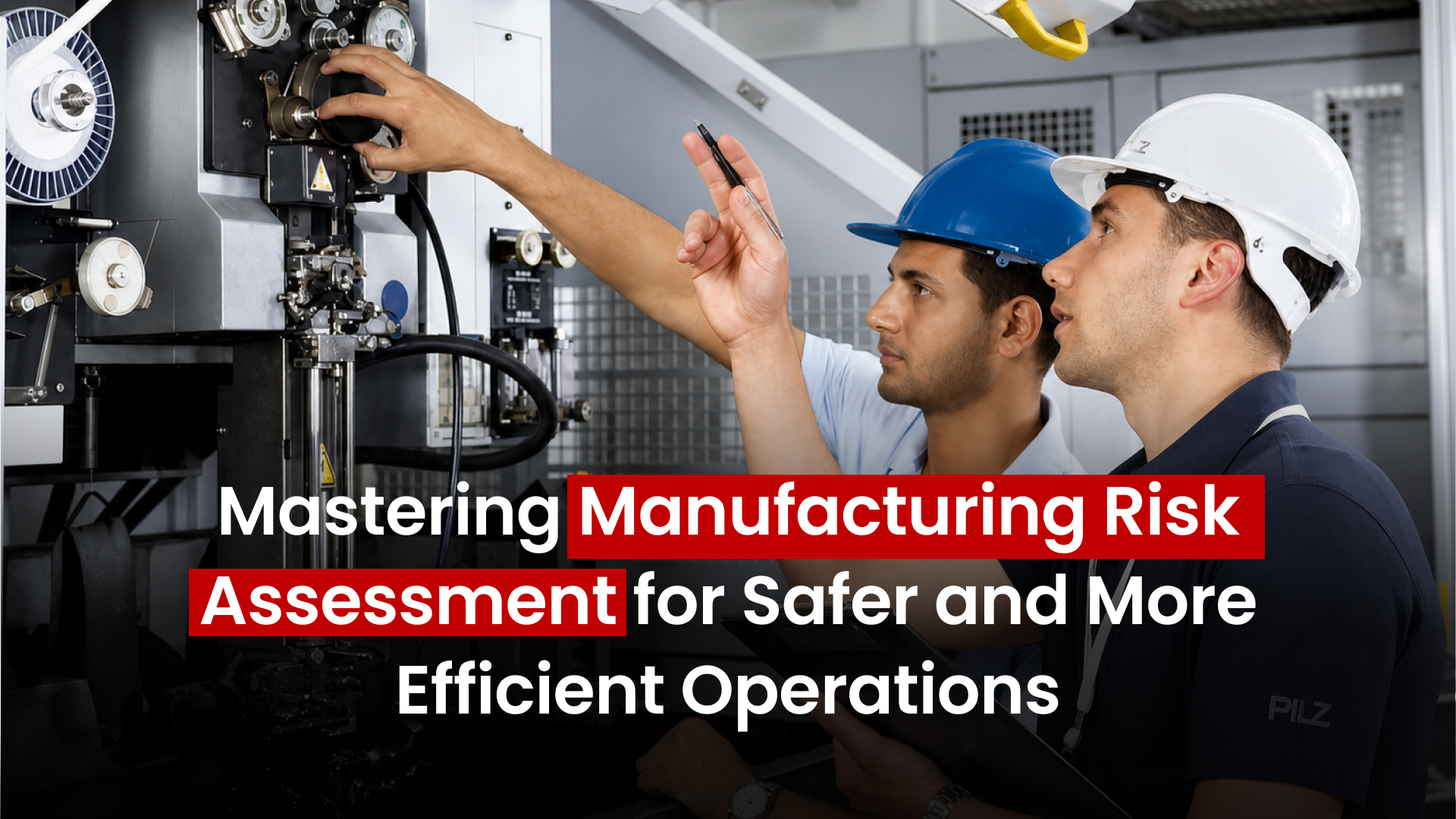
Safety in manufacturing is not a separate initiative from production. It is part of how reliable production is achieved. When machines, people, control systems, and operating procedures interact in fast-moving environments, small gaps in design or process can create significant risk. Those risks may lead to injury, unplanned downtime, quality issues, or costly corrective action.
That is why manufacturing risk assessment remains a critical part of modern industrial operations. It helps teams identify hazards early, evaluate how those hazards could affect operators and equipment, and implement practical control measures before problems escalate. In regulated or high-throughput environments, that structured approach also helps support validation, documentation, and long-term operational consistency.
In the webinar, “PILZ: Mastering Manufacturing Risk Assessment,” iAutomation and PILZ walk through the role of risk assessment in safer machine design and day-to-day manufacturing operations. This blog highlights the main takeaways from that session, including the risk assessment process, common safety concerns in industrial environments, and risk prevention strategies that help reduce exposure across the lifecycle of a machine or production line.
Watch the Webinar
For a deeper walkthrough of the concepts covered below, watch the full webinar from iAutomation and PILZ. It provides useful context for teams evaluating machine safety, manufacturing safety protocols, and risk reduction priorities across new and existing equipment.
What Is Manufacturing Risk Assessment?
Manufacturing risk assessment is a structured process used to identify hazards, estimate and evaluate risk, and define measures to reduce that risk to an acceptable level. In practice, it is commonly used during machine design, line modification, commissioning, and process improvement activities.
A proper manufacturing risk assessment does more than produce a checklist. It looks at the full operating context, including machine motion, operator interaction, maintenance access, control reliability, foreseeable misuse, and recovery from faults. That system-level view is important because many manufacturing incidents are not caused by a single component failure. They happen when several small issues combine under real operating conditions.
This is also why risk assessment should not be treated as a one-time exercise. Manufacturing environments change. Products change, tooling changes, staffing changes, and throughput expectations change. Safety protocols that were adequate during initial startup may no longer align with current production demands without review and revalidation.
Why Risk Assessment Is Critical in Manufacturing
Manufacturing operations contain a wide range of hazards. These may include moving machinery, pinch points, stored energy, electrical exposure, robotic cells, automated material handling, and manual intervention during setup or clearing jams. Even a well-designed machine can present risk if procedures are unclear or safeguarding is bypassed to maintain output.
Poor safety practices can have immediate and long-term consequences. The obvious concern is operator injury, but the impact often extends further. A single incident can interrupt production, trigger investigations, damage equipment, and create quality or compliance issues that affect the broader operation.
Structured manufacturing risk assessment helps organizations move from reactive correction to proactive risk prevention. Instead of waiting for an event to reveal a weakness, teams can identify likely failure points in advance and build in safeguards, training, and operating controls that support repeatability and reliability.
Key Steps in the Risk Assessment Process
Identifying Hazards
The first step is to identify hazards across the machine or process. This includes normal operation, setup, maintenance, cleaning, troubleshooting, and restart conditions. Teams should examine not only the machine itself, but also how operators interact with it, how materials enter and exit the process, and what happens during abnormal states.
Hazard identification is most effective when it involves multiple perspectives. Engineering, maintenance, operations, and safety personnel often see different types of risk. Bringing those views together improves coverage and helps reduce blind spots.
Evaluating Risks
Once hazards are identified, the next step is evaluating risk based on severity and likelihood. This includes understanding how serious a potential injury or event could be, how often personnel are exposed, and whether the hazard can be avoided or limited in time.
This stage matters because not all risks are equal. A systematic evaluation helps teams prioritize actions based on actual exposure and consequence, rather than intuition alone. It also creates a more defensible basis for selecting safety functions and protective measures.
Implementing Control Measures
After evaluation, the focus shifts to risk reduction. Control measures may include inherently safe design choices, fixed or movable guards, safety interlocks, emergency stop functions, presence sensing, safe motion functions, procedural controls, and operator training.
The key point is that safety measures should match the real operating condition. A control that looks effective on paper may not work well if it slows recovery, complicates maintenance access, or is routinely overridden. Good risk prevention strategies reduce risk while still supporting practical machine use.
Monitoring and Reviewing
Risk assessment does not end when a machine is commissioned. Teams should monitor performance, review incidents and near misses, and reassess risk after modifications, line changes, or production increases. This ongoing review helps keep manufacturing safety aligned with the actual process, not just the original design intent.
Common Risks in Manufacturing Environments
Several categories of risk appear repeatedly in manufacturing settings:
Machine-related risks
These include contact with moving parts, unexpected startup, unsafe access to hazardous zones, and inadequate safeguarding around automated equipment.
Operational and process risks
These often involve material flow issues, jam clearing, changeovers, maintenance intervention, and poor coordination between machine states and operator actions.
Human error
Even experienced operators can make unsafe decisions when procedures are unclear, interfaces are inconsistent, or production pressure is high. A strong safety system is designed to account for predictable human interaction.
Compliance-related risks
Incomplete documentation, weak validation practices, or poorly defined safety responsibilities can create additional exposure, especially when equipment is deployed across multiple sites or industries.
How PILZ Supports Manufacturing Safety
PILZ is widely associated with machine safety, risk assessment support, and safety education for industrial environments. In this webinar, the value is not just in discussing standards or devices in isolation. It is in showing how safety should be addressed as part of an integrated manufacturing system.
That perspective is useful for OEMs, integrators, and end users alike. Effective manufacturing safety depends on more than selecting individual safety components. It requires a disciplined process for hazard review, control selection, documentation, and ongoing evaluation.
Through the webinar with iAutomation, PILZ helps frame risk assessment as a practical engineering function that supports safer operation, better control, and more consistent decision-making across the machine lifecycle.
Benefits of Effective Risk Management
When risk management is approached systematically, the benefits extend well beyond incident reduction.
Improved workplace safety is the first outcome, but there are operational advantages as well. Clear safety protocols help reduce unplanned stops caused by unsafe conditions or unresolved hazards. Better-defined controls can support more consistent machine behavior during operation, fault recovery, and maintenance. Teams also gain a stronger foundation for documentation, training, and future modifications.
In many facilities, effective risk management also improves efficiency because operators and maintenance teams spend less time working around poorly designed safeguards or unclear procedures. The result is a production environment that is easier to validate, easier to maintain, and more reliable over time.
Watch the Webinar: Mastering Manufacturing Risk Assessment
The webinar is worth watching for teams that need a clearer understanding of manufacturing risk assessment in real operating environments. It connects core safety principles with practical application and gives viewers a better framework for identifying hazards, evaluating exposure, and selecting appropriate risk reduction measures.
Whether you are reviewing a new machine, updating an existing line, or refining plant-wide safety protocols, the session offers useful guidance on how to approach risk prevention strategies with more structure and consistency.
Watch the full webinar to hear the discussion directly from iAutomation and PILZ and to gain a more complete view of how manufacturing safety and risk assessment should work together.
Conclusion
Manufacturing risk assessment is a foundational part of safe, repeatable, and efficient production. It helps teams identify hazards early, apply appropriate safety protocols, and reduce risk in ways that support both operator protection and operational performance.
The strongest results usually come from a proactive approach. That means evaluating risk before an incident occurs, reviewing systems after changes, and treating safety as part of the machine and process design, not as a separate task.
For a more detailed look at these topics, watch the “PILZ: Mastering Manufacturing Risk Assessment” webinar from iAutomation and PILZ. It is a useful resource for teams working to strengthen manufacturing safety, improve risk prevention strategies, and build more reliable operations.