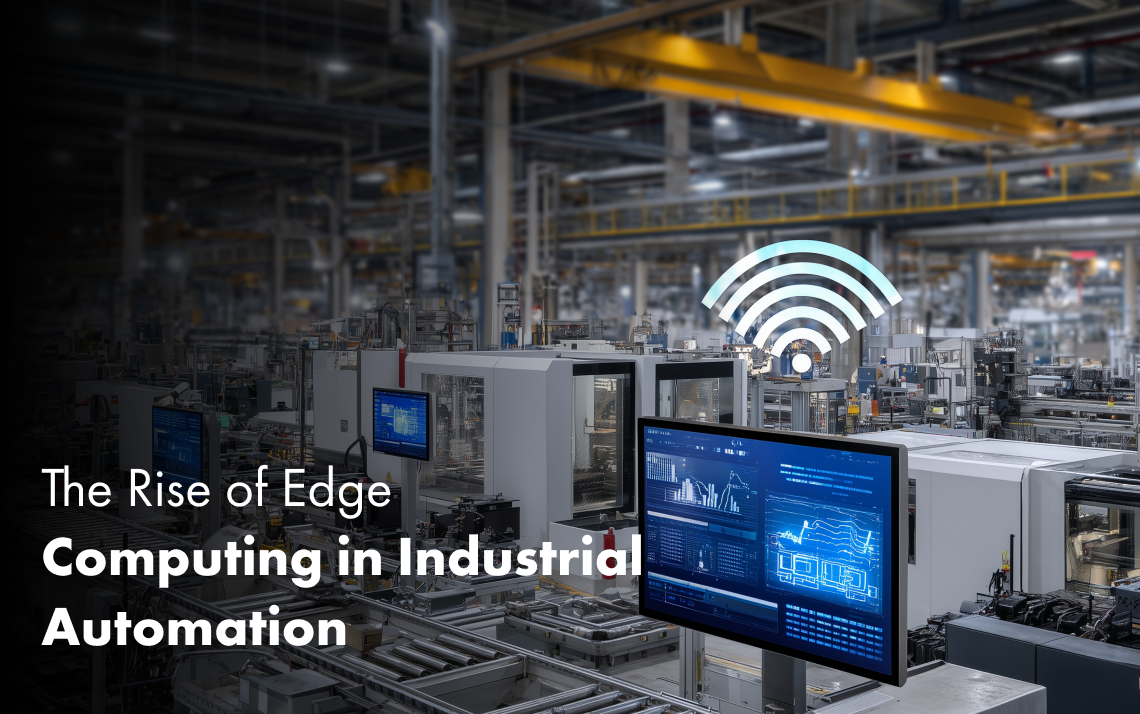
The industrial floor has changed tremendously today. Machines now communicate directly, with data moving at high speed and decisions made on the factory floor rather than in the cloud. This shift demands agility and adaptability over sheer size or cost, pushing manufacturers to rethink system design. At the core of this transition is scalable control architecture.
Why the talk around scalable control architecture is getting louder
Factories used to rely on rigid setups: install a controller, wire the machines, program a few routines, and hope the line ran for years without issue. That model doesn’t hold anymore. Demand shifts overnight, product lines change constantly, and equipment wears faster. Fixed designs can’t keep pace — adaptability is now the key to survival.
The idea is to simply build a control system that grows or shrinks when needed. Add new machines without redoing the whole layout. Run heavier workloads without changing the main controller. It’s all about flexibility that doesn’t break your setup or your budget.
Edge computing’s role in all this
Edge computing has made scalable control systems even more powerful. When data gets processed right near the machine, instead of being sent all the way to a central server , response times drop dramatically. Picture a robotic arm that changes speed almost instantly, just because the data’s handled right there, not miles away.
The edge computing and scalable control architecture make a solid pair. The first speeds up decision-making; the second makes sure the entire structure can handle it. One gives power, the other gives room to grow.
Breaking down the idea: how it actually works
In a scalable control setup, you usually have smaller modules, each handling a part of the job. One module can control a conveyor, another can manage sensors, and another might focus on safety or communication. These pieces link together through industrial control platforms that can expand when needed.
Instead of one big controller doing all the work, you get multiple compact units that divide the load. This makes troubleshooting easier too. If one unit fails, the others keep running. Downtime goes down, efficiency goes up.
For many, this modular automation architecture is a big step forward from the old ways. It doesn’t demand an overhaul. You can upgrade one layer at a time, a few modules now, a few later, without disturbing the whole chain.
Building systems that last
Nobody wants to redo their plant every few years. That’s why future-proof machine design has become a priority for most manufacturers. Scalable control architecture fits right into that idea. It allows teams to add features, integrate sensors, or adapt to new communication protocols without heavy rewiring or software rebuilds.
You don’t have to be a giant company to use it. Even smaller setups , packaging units, bottling lines, small assembly stations , can start with a basic setup and expand slowly. That’s what makes it so appealing. You pay for what you need now and still stay ready for tomorrow.
PLC and PAC systems still hold the core
People often think scalable systems mean abandoning older technologies. Not really. PLC and PAC systems are still the backbone of automation. They’ve just evolved to play better with scalable control designs. Modern controllers support distributed processing, open communication standards, and seamless integration with IoT layers.
So instead of being replaced, PLCs and PACs are now part of a bigger, more flexible story. They help connect field devices, sensors, and cloud gateways , all while staying reliable and easy to maintain.
Benefits that show up fast
Companies that adopt scalable control systems often emphasize the freedom they gain. Small modifications can be made without assembling a full engineering team. Machine builders can test new features more quickly, and maintenance staff can identify and resolve defects with minimal guesswork
Cost control is a decisive advantage. While upfront investment may look higher, longterm savings come from avoiding costly rebuilds with every change. Lower energy use, reduced downtime, and smarter utilization of existing hardware compound into significant efficiency gains.
Challenges still exist
Moving out of old structures and into new scalable control structures may initially disorient teams. Staff training, documentation, compatibility, all that costs. However, after the learning curve levels off, it will be a pay-off.
Edge computing introduces critical cybersecurity challenges as more devices become interconnected. It’s a complex topic in its own right — and it deserves dedicated attention.
The shift isn’t slowing down
Industrial automation is moving too fast to rely on old fixed systems. Scalable control architecture gives industries the breathing room they need to stay agile. It’s not just about adding more controllers; it’s about creating a structure that bends without breaking.
Edge computing, modular automation architecture, and open industrial platforms are all heading in one direction , more control, less complexity. And while the change feels technical, its result is simple: faster machines, smarter processes, and fewer headaches.
Where companies start , and where they stumble
Most manufacturers don’t jump into a new architecture overnight. They start small. Maybe they add a few edge devices to a production line or install a modular PLC setup for testing. The idea sounds good on paper, but the first roadblock is usually structure.
When there’s no clear plan for how the scalable control system will grow, teams end up adding modules randomly. It works at first but becomes messy later. Cables multiply, software configurations clash, and no one knows what talks to what. Here modular automation architecture actually shows its worth. It forces you to think of every section as a piece that must fit into the bigger picture, not as a one-time patch.
So, when the next machine or process line is added, it simply snaps into the existing setup without creating chaos.
Real-world approach: start at the edges
Edge computing and scalable control architecture work best when they grow together. Instead of changing the entire backbone, many companies begin by placing edge controllers at points where real-time decisions matter most , quality inspection cameras, robotic arms, or conveyor systems.
These devices handle data instantly and pass on only the necessary information to the cloud or central system. The result? Faster reactions, less data overload, and more accurate process control.
With this gradual approach, the old system and the new one can co-exist for a while. The team learns, tests, and tweaks things without risking full-scale downtime. It’s not flashy, but it works.
Human side of automation
A big reason some automation projects fail isn’t because the tech doesn’t work , it’s because people aren’t ready for it. Scalable systems bring flexibility, yes, but they also bring change. Engineers who’ve worked for years on fixed PLCs now have to learn about distributed control, software-defined logic, and networked systems.
That’s why training isn’t optional. Teams must understand how modules interact, how updates roll out, and how to maintain backups. When everyone is comfortable with the tools, scalable control systems start showing their true power.
It’s like giving workers better gear , they still do the same job, but faster, safer, and with fewer mistakes.
How design mistakes cost money
Another trap many fall into is over-customizing. Every plant wants its own “special” setup, but too much customization kills scalability. When a new controller or module doesn’t fit into the main framework, integration costs shoot up.
A smarter move is to standardize at least 70–80% of the design. Use open industrial control platforms, stick to standard communication protocols, and pick components that support modular expansion. That way, adding a new machine later doesn’t require rewriting the whole logic or redesigning panels.
Sometimes the best design isn’t the most complex , it’s the one that stays adaptable for years.
The silent strength of data
People often skip over the role of data. Every scalable control setup runs on it — data from sensors, drives, controllers, all of it. But raw numbers alone have little value. Edge devices and control layers have to filter, organize, and remove noise before information moves downstream.
When data is properly structured, patterns emerge. You can see where production slows, detect when a motor begins drawing excess current, and even predict failures before they occur. This is how companies cut wasted energy and solve problems early.
Scalable systems quietly excel at turning complexity into clarity. Clear information means fewer surprises, smoother operations, and stronger profits.
Blending the old with the new
The best part is, scalable control doesn’t mean throwing away what’s already working.
Most factories can keep their existing PLC or PAC systems and just add newer modules around them. Think of it like stacking layers. The older controllers handle the main tasks; the newer edge units focus on analytics, cloud links, or quick feedback from the floor.
As time and budgets allow, those older parts can be replaced piece by piece. It’s not an overnight change. This mix of proven equipment and fresh tech gives plants a balance, steady, fast, and reliable.
Future-proofing without overspending
Everyone talks about “future-proofing,” but few explain what it actually means in automation. It’s not about buying the most expensive system. It’s about choosing a setup that won’t go obsolete when new technologies arrive.
That’s exactly what scalable control architecture gives you. When protocols change or new devices come in, you can adapt. You don’t need to rebuild the entire control layer; you just update, replace, or expand modules.
In a way, it’s like having a plant growing along with your business. Whether it’s a new production line or integration with AI-based monitoring tools , you already have the foundation to support it.
What’s coming next
With the increased interconnection of industries, scalability will be the new normal, rather than the reward. As machine learning models are put closer to the edge, automation systems will be able to make micro-decisions previously required to be made manually.
More factories will tend to gravitate to the hybrid control models, where edge-based, cloud computing, and PLC-based systems all collaborate. The transition will not happen in one jump, but bit by bit, as well as the architecture itself.
Final thoughts
Scalable control architecture is not a passing fad. It represents a more human approach to running machines — flexible, adaptable, and resilient. Growth or course corrections are not penalized; the system evolves with you.
For businesses, it means reduced downtime and smoother upgrades. For engineers, it provides the freedom to experiment without risking system integrity. For the industry, it signals a smarter, leaner future — one that moves at the pace of change