
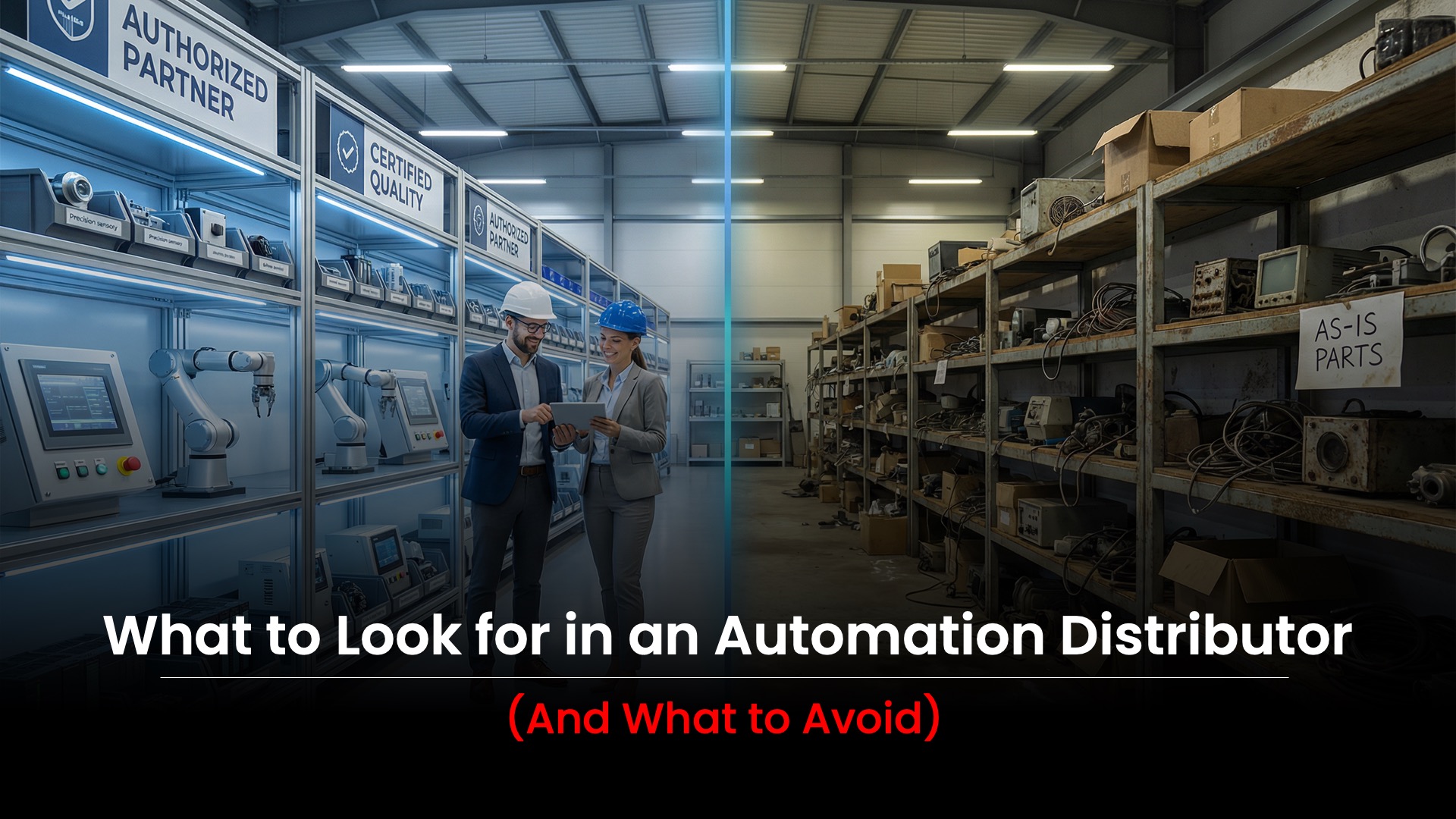
In the industrial sector, automation has shifted from a luxury to a necessity. Manufacturers and process operators across multiple industries rely on automation systems. These systems improve productivity, enhance quality, ensure safety, and help you remain competitive in the market.
Among these, automation distributors play a critical but often misunderstood role. Choosing the right automation distributor is about far more than finding the lowest price on PLCs, drives, or sensors.
A strong distributor acts as a technical advisor, supply chain partner, and long-term ally throughout the lifecycle of your automation systems. The wrong choice of automation distributor, on the other hand, can result in costly downtime, mismatched components, poor support, and long-term reliability issues.
This article explores what to look for in an automation distributor, providing a detailed framework to help OEMs, system integrators, and end users make informed decisions.
Things to Look for in an Automation Distributor
Here are some of the things you should consider when choosing automation distributors:
1. Authorization Status and Manufacturer Alignment
When choosing automation distributors, the first and most non-negotiable requirement is authorization. Authorized distributors have formal agreements with manufacturers, granting them access to certified products, factory training, warranty support, and escalation channels.
Authorization distributors:
- Sell genuine products backed by manufacturer warranties
- Receive direct technical support and training from the OEM
- Have access to the latest product updates and lifecycle information
- Can escalate issues directly to the manufacturer when problems arise
An unauthorized or “grey market” supplier may offer lower prices, but this often comes at the cost of warranty risk, limited support, and uncertainty around product authenticity. In mission-critical automation systems, these risks are rarely worth taking.
In addition, review the brand portfolio the distributor offers. Strong distributors represent reputable, industry-proven manufacturers across PLCs, HMIs, motion control, robotics, sensors, safety systems, and industrial networking. A well-rounded portfolio reduces compatibility challenges and simplifies system design.
2. Depth of Technical Expertise
One of the most important considerations when choosing automation distributors is their level of application engineering expertise. Strong distributors employ engineers who understand complete systems, not just individual components.
Look for distributors with:
- In-house application engineers
- Specialists in PLCs, motion control, robotics, and safety
- Knowledge of industrial networks and protocols (EtherNet/IP, PROFINET, Modbus, OPC UA, etc.)
- Experience in system architecture and component selection
The difference between average and excellent distributors often lies in their ability to support technical sales support automation. This implies that the commercial discussions are guided by real engineering insight rather than catalog-driven selling.
Such distributors ask the right questions before recommending products. They seek to understand your application, environment, performance requirements, and future expansion plans. If a distributor only responds with part numbers and prices, they may not be equipped to support complex automation challenges.
Technical expertise becomes especially critical during commissioning, troubleshooting, and unexpected downtime when fast, accurate support can save hours or even days of lost production.
3. Industry and Application Experience
Automation requirements vary significantly by industry. A distributor that understands your specific sector brings valuable insight that can prevent costly mistakes.
For example:
- Food & beverage applications require hygienic design, washdown-rated components, and regulatory awareness
- Pharmaceutical and life sciences environments demand validation support, documentation, and compliance with GMP standards
- Oil & gas and hazardous areas require ATEX/IECEx knowledge and safety-certified equipment
- OEM machine builders need cost-effective, scalable solutions and long-term component availability
Ask potential distributors about their experience in your industry and request examples of similar projects. Industry knowledge reduces rework, accelerates approvals, and lowers regulatory risk as makes them better equipped to recommend proven solutions rather than theoretical ones.
You should consider these factors that should heavily influence decisions when choosing automation distributors.
4. Product Availability and Supply Chain Strength
Even the most advanced automation system designs can fail if critical components are unavailable when needed. Supply chain performance is therefore a key factor in distributor selection, directly impacting project schedules, uptime, and overall system reliability.
Key considerations when evaluating distributors include:
- Distributors with strategically located warehouses can deliver components faster and reduce shipping delays. This comes in handy for time-sensitive projects or emergency replacements.
- Reliable distributors provide clear information on expected delivery times. This helps your team plan project timelines and maintenance schedules with confidence.
- Experienced distributors proactively handle limited availability. They do so either by sourcing alternatives, prioritizing critical orders, or offering guidance on substitutions.
- For mission-critical systems, the ability to receive components quickly can prevent costly downtime and production losses.
- Distributors who can maintain predefined inventories of essential parts help ensure uninterrupted operation.
Strong distributors proactively communicate about supply constraints, alternatives, and product discontinuations. They help customers plan ahead rather than reacting to last-minute surprises. In high-uptime cases, this proactive approach can significantly reduce operational risk.
Hence, avoid choosing automation distributors, who only react after shortages impact your operations to avoid downtime.
5. Lifecycle Management and Obsolescence Support
Industrial automation systems often remain in service for 10, 20, or even 30 years. During that time, products evolve, software versions change, and components become obsolete.
A reliable automation distributor provides lifecycle support by:
- Tracking whether components are active, mature, or discontinued.
- Providing guidance for moving systems to newer technologies without disrupting operations.
- Recommendations for compatible components or broader system updates.
- Ensuring updates and upgrades maintain system reliability and performance.
When choosing automation distributors, ensure they have strong lifecycle management capabilities. This will help your organizations avoid unplanned obsolescence and spread upgrade costs over time. This long-term perspective is particularly valuable for end users with large installed bases and OEMs supporting machines in the field.
6. Training and Knowledge Transfer
Automation technology changes rapidly, with new software, hardware, and integration methods constantly emerging. Distributors that prioritize training and knowledge transfer provide long-term strategic value by ensuring your team stays current with technological advances and can maximize system performance.
When choosing automation distributors, look for those that offer comprehensive educational resources, such as:
- Structured programs officially recognized by equipment or software manufacturers, ensuring your team learns current standards and best practices.
- Interactive sessions where employees practice with real devices, software, or control systems, building practical skills and confidence.
- Application-specific training focused on your operational needs, such as manufacturing process automation, robotics integration, or SCADA system configuration.
- Accessible, flexible learning opportunities such as lunch-and-learn sessions and webinars that introduce new technologies or troubleshooting techniques without disrupting daily operations.
- Manuals, checklists, and workflow recommendations that support ongoing operations and troubleshooting.
Training helps internal teams become more self-sufficient, reduces reliance on external support, and improves system reliability. For OEMs and integrators, distributor-led training can also shorten development cycles and improve standardization.
7. Commercial Structure and Total Cost of Ownership
Price is important, but it should always be considered in context. When selecting an automation distributor, evaluate commercial terms through the lens of total cost of ownership, rather than simply unit price. This approach ensures long-term value, reliability, and operational efficiency.
You should consider the following aspect when choosing automation distributors:
- Comes with project-based pricing flexibility based on the scale, complexity, or duration of specific projects to optimize budgets without compromising performance.
- Offers OEM or Long-Term Partnership programs that provide preferred pricing, volume discounts, or collaborative support for recurring projects.
- Have clear price policies on price stability, escalation clauses, and contract terms, reducing financial uncertainty over the lifecycle of a system.
- The ability to plan procurement in advance, streamline inventory management, and avoid delays in critical production or deployment schedules.
Distributors that understand downtime costs, engineering effort, and lifecycle support often deliver more value than those focused solely on unit price. This distinction is critical when choosing automation distributors for automation systems.
8. Responsiveness and Relationship Quality
In automation, problems rarely occur at convenient times. When a production line is down, responsiveness matters far more than marketing materials. Selecting a distributor with proven support capabilities can prevent costly downtime and operational disruptions.
You must evaluate distributors based on:
- How quick and accurate are the responses that keep your team informed?
- What is the availability of technical support and knowledgeable staff when issues arise?
- Do they have the ability to engage manufacturers directly to resolve challenging problems?
- Do they have reliable points of contact who can understand your systems and requirements?
- How proactive is the company in anticipating challenges and addressing them before they become critical?
Be aware of automation distributor’s red flags, such as slow responses, unclear accountability, or a tendency to shift blame, which can indicate a distributor that may fail under pressure.
The best distributors act as partners, not vendors. They understand your business priorities, anticipate operational challenges, and advocate on your behalf when issues arise, providing true long-term value beyond product supply.
9. Strategic Alignment and Long-Term Vision
Ultimately, choosing an automation distributor is about partnership, not transactions. The strongest distributors think beyond immediate orders and align with your long-term business and technology strategy.
Strategic distributors ask questions such as:
- How will your systems evolve over the next decade?
- Where can standardization reduce complexity and improve efficiency?
- How can technology roadmaps align with overall business growth?
This long-term mindset reflects the best automation partner traits and separates strategic allies from short-term vendors. It also ensures that your distributor supplies products and actively supports your business objectives and future success.
Conclusion
Choosing the right automation distributor is about more than finding the lowest price. It’s about finding a partner who understands your systems, anticipates challenges, and supports you throughout the entire lifecycle.
When choosing automation distributors, look for those that offer engineering insight, proactive service, and a long-term partnership mindset. The right partner will protect your automation investment, support your teams under pressure, and evolve alongside your business.
For companies seeking a reliable and technically proficient partner, iAutomation offers deep engineering expertise, comprehensive product offerings, and proactive support to ensure your automation projects succeed from design to deployment. Explore our services and learn how we can help your business thrive.